
The Electric Revolution Is Reaching the Farm
By Gillian Christie
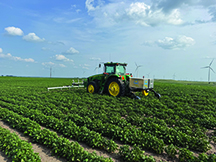
Why More Growers Are Considering Electric Weed Control Before Investing in Another Herbicide Program
The electric revolution is no longer limited to passenger vehicles and transportation. It is beginning to transform agriculture as well.
The Lightning Weeder®, developed by LASCO, uses electricity instead of herbicides to destroy weeds from the inside out. The technology gives growers another option to combat herbicide-resistant weeds, improve harvest efficiency and strengthen an integrated weed-management program. Through on-farm demonstrations and rentals, producers can evaluate its performance under their own operating conditions before making an equipment investment.
Every growing season, farmers face the same question: What will work better next year?
For decades, the answer has often been another herbicide application or a different chemistry. Yet resistant weeds continue to increase production costs, complicate harvest, reduce yields and challenge long-term weed management across North America.
According to the International Herbicide-Resistant Weed Database, scientists have documented 548 unique cases of herbicide-resistant weeds involving 275 weed species across 76 countries. Resistance has been reported to 168 different herbicides.¹ As resistance continues to spread, the Weed Science Society of America recommends integrated weed-management practices that combine multiple approaches rather than depending on a single method of control.² Electric weed control can become one of those complementary tools—not as a replacement for every existing practice, but as another option for controlling weeds that survive conventional programs.
How Electric Weed Control Works
The Lightning Weeder® directs high-voltage electrical energy through weeds that extend above the crop canopy. The energy generates heat inside the plant, converting its internal moisture into steam and destroying tissue throughout the stem and root system. Rather than simply burning the visible portion of the weed, the process disrupts the plant from the inside out. Growers can often see the effects within minutes.“The best example is to put somebody in a tractor and make a few rounds,” said Kevin Olson, President of LASCO. “When we turn around at the end of the field, the weeds we’ve treated are already dying. It’s basically instant gratification.”
A Proven Technology Returns to the Field
Although agricultural electrification may sound futuristic, electric weed control is not a new concept. The Lightning Weeder® was originally developed in the early 1980s for sugar beet production. Today, many of the challenges that inspired the technology more than four decades ago have returned, including resistant weeds, difficult late-season escapes and harvest complications.
“We’re back in sugar beets again,” Olson said. “We have chemical-resistant weeds, harvest challenges and many of the same issues that started this technology in the first place.”
The renewed interest now extends beyond sugar beets. Conventional row crop, specialty crop and organic growers are evaluating electric weed control as an additional way to strengthen existing management programs. For California agriculture, this renewed attention is part of a broader movement toward precision equipment and energy-based technology. The state’s diverse mix of vegetables, vineyards, orchards, row crops and other specialty crops creates a need for adaptable equipment that can complement established field practices.
Why Timing and Crop Height Matter
As with most weed-control practices, timing affects performance. Younger plants are generally easier to control, and the target weeds must extend above the crop canopy so the applicator can contact them without contacting the crop.
“The younger the plant, the better,” Olson explained. “The weeds need to extend above the crop canopy so you’re targeting the weeds—not the crop.”
Addressing escapes before they mature may improve harvest efficiency, protect crop quality and reduce weed-seed production. Preventing surviving weeds from replenishing the seedbank can also help limit future pressure. Growers evaluating the technology should begin by identifying which weeds are surviving their current program and whether those species are becoming increasingly difficult to manage. Crop height, weed maturity, field conditions and the appropriate treatment window must also be considered.
Evaluating the Technology Under Field Conditions
Equipment performance cannot be fully assessed from a brochure or video. Growers need to see how a machine operates with their tractor, crops and field conditions.
LASCO’s demonstration and rental programs allow producers to mount the Lightning Weeder® on their own tractor and test it against the weeds creating problems in their fields. This firsthand experience can help them evaluate operating requirements, treatment timing and potential value before purchasing the equipment.
“I’ve had growers tell me they saw a three- to five-ton yield difference after using the Lightning Weeder,” Olson said. “The return on investment can be very, very quick. We bring the machine out, set it up on their tractor and let them run their own acres.”
Results will vary depending on the crop, weed pressure, treatment timing and operating conditions. Evaluating the technology on the farm allows each producer to determine whether it has a practical place within the operation’s broader weed-management strategy.
Planning for the Coming Season
As harvest approaches, growers begin examining what worked, what fell short and what should change during the coming season. Late-season escapes can reveal weaknesses that may not have been visible earlier and help producers decide where another management tool could be useful. For farms facing resistant weeds or difficult escapes, electric weed control may offer a practical addition to an integrated program. Its renewed relevance reflects a broader reality in modern agriculture: managing resistant weeds will require more than another product or a single method.
It will require combining proven practices with technologies that give growers greater flexibility, precision and control in the field.