
From California Farms to Healthy Families: The Benefits of Eating More Fruits and Vegetables
By Azin Pourkhalili, Ph.D.,
Azin Pourkhalili, Ph.D., Farm Bureau
Youth, Families, and Communities Advisor, UC Cooperative Extension, Kern, Inyo, and Mono Counties
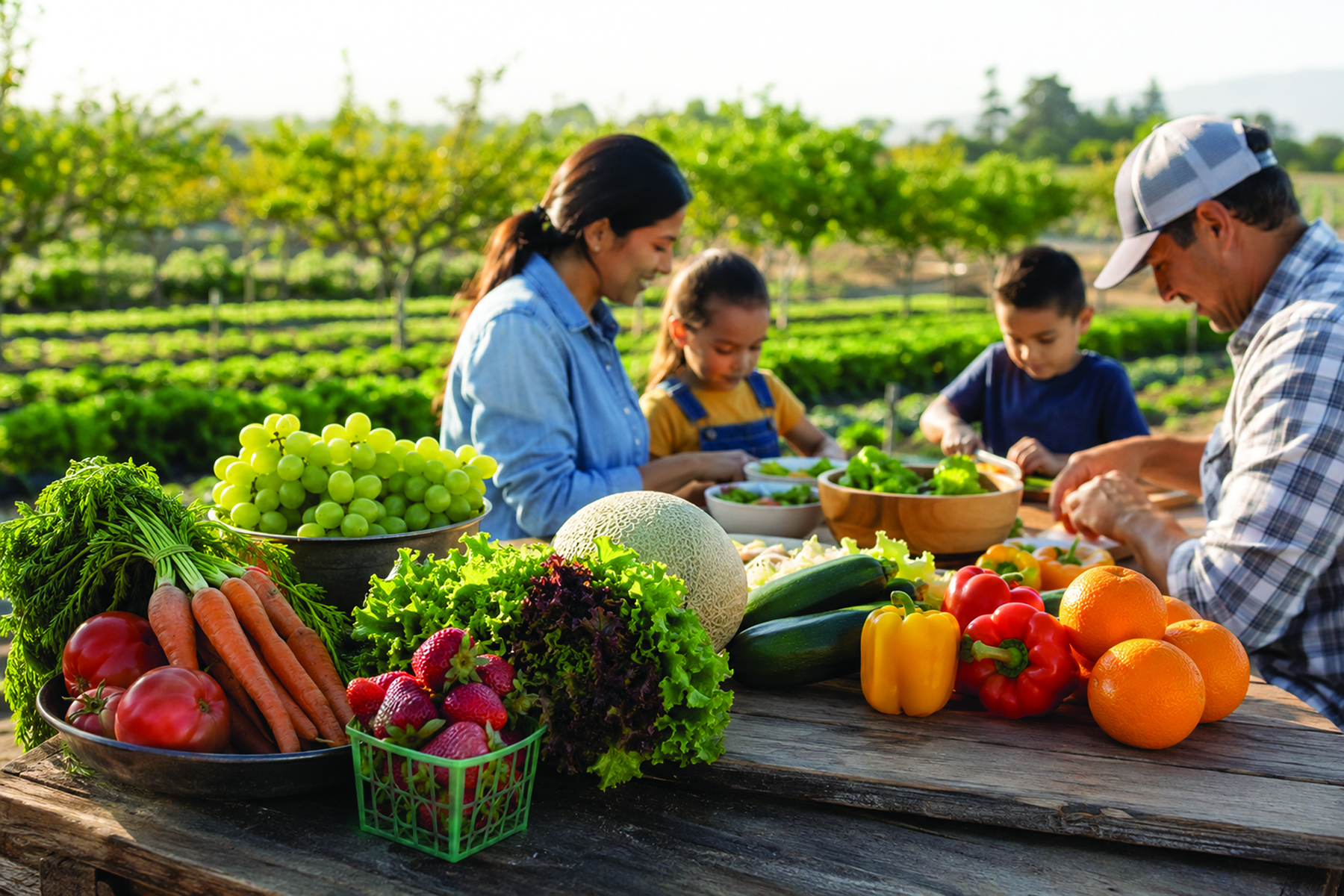
California agriculture plays an essential role in feeding families across the nation. California grows nearly half of the country’s vegetables and more than three-quarters of its fruits and nuts. Our farms provide an impressive variety of nutritious foods—from grapes, citrus, berries, and melons to carrots, tomatoes, lettuce, and many other vegetables.
Despite this abundance, most Americans do not eat the recommended amounts. An analysis of 2019 data found that only 12.3% of U.S. adults met fruit recommendations and only 10% met vegetable recommendations. The gap also affects younger generations. An analysis of California Health Interview Survey data found that only 29.3% of children and 25.9% of adolescents reported consuming five or more servings of fruits and vegetables per day.
Fruits and vegetables are important sources of dietary fiber, potassium, folate, and vitamins A and C. Fiber supports digestive health, while potassium contributes to healthy blood pressure. Regular consumption of fruits and vegetables, as part of an overall healthy diet, is associated with a lower risk of cardiovascular disease, type 2 diabetes, obesity, and some cancers. A large analysis involving nearly 1.9 million people found that consuming about five servings per day was associated with a 13% lower risk of death compared with consuming two servings per day. Because this research was observational, the findings show an association rather than proving that fruit and vegetable consumption alone caused the reduction in mortality.
Families do not need to make major changes all at once. Small, consistent steps can make a meaningful difference:
• Add fruit to breakfast or choose it as a snack.
• Include at least one vegetable with lunch and dinner.
• Keep washed and cut produce visible and ready to eat.
• Let children select and help prepare a fruit or vegetable.
• Choose seasonal produce when possible, for better flavor and value.
• Use frozen or canned options without added sugar or excess sodium when fresh produce is unavailable.
Variety also matters. Choosing different colors throughout the week helps provide a wider range of nutrients.
From the field to the family table, California agriculture is closely connected to community health. By enjoying more of the foods grown in our state, families can build healthier eating habits while recognizing and supporting the farmers and agricultural workers who make these foods available.