
Glyphosate-Resistant Weeds in California
By Jorge Angeles
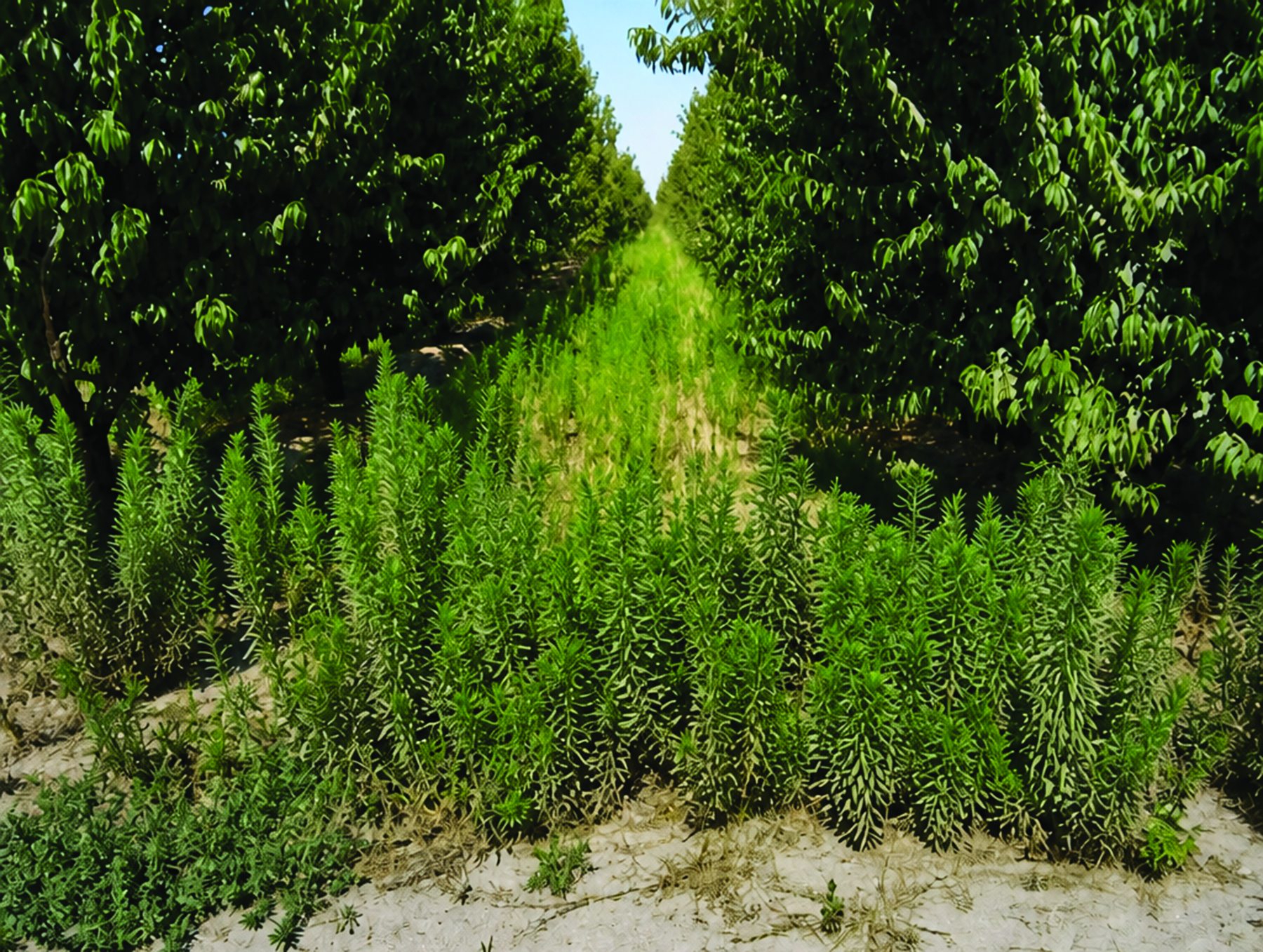
Glyphosate-Resistant Horseweed, Freso County — Sacramento Valley Orchards
Glyphosate is a systemic post-emergence herbicide that is used for weed control in many crops in California. This herbicide is a non-selective herbicide that controls many broadleaf and grass weeds and can be safely used in different cropping systems. It is commonly used in orchards, vineyards, agronomic crops, and non-crop areas. However, reliance on glyphosate herbicides over time has led to the development of glyphosate-resistant weeds in California.
Herbicide resistance normally occurs when a weed population develops the ability to survive an herbicide application at a dose that would normally control the weed. This is caused by the repeated use of herbicides with the same mode of action. Over time, these weed escapes survive, reproduce, and become the dominant weeds in the field.
In the last two decades, there are many glyphosate-resistant weeds that have been confirmed in California such as horseweed (marestail), hairy fleabane, Italian ryegrass, rigid ryegrass, annual bluegrass, junglerice and Palmer amaranth. These weeds can be commonly found in different cropping systems, including orchards, vineyards, and glyphosate-tolerant crops. Hairy fleabane is one of the weeds that has become widespread across different cropping systems in California, especially in cropping systems where glyphosate is frequently used. Herbicide resistant weeds are more commonly developed in orchards, vineyards, and non-crop areas because repeated applications of glyphosate are relied upon for weed control.
Glyphosate-resistant weeds can affect crops in different ways. Poor weed control can lead to increased competition for water, nutrients, and light. This competition for resources leads to the reduction of crop vigor, yield and quality. Some species, such as Palmer amaranth, grow rapidly and can interfere with harvest operations, increasing labor and management costs. Once herbicide resistant weeds become dominant in a field or orchard, growers are often forced to sequential applications or adopt more expensive or less convenient weed control strategies.
Using herbicides with different modes of action is important for long-term weed management. A mode of action refers to how an herbicide affects a plant at the biochemical level. For example, Glyphosate inhibits an enzyme required for protein synthesis. When the same mode of action is repeatedly used, it creates strong selection pressure that favors resistant individuals. Tank-mixing and rotating herbicides with different modes of action can help reduce this selection pressure. By using herbicides with different modes of action, there is less of a chance that a weed will survive an herbicide application. This approach improves weed control and reduces the risk of weeds developing resistance to herbicides.
To reduce the risk of weeds developing herbicide resistance, it is important to use pre-emergence herbicides with residual activity, tank-mix herbicides with different modes of action, and control weed escapes. Controlling weed escapes after an herbicide application is critical to preventing weeds from setting seeds and spreading. In addition, using multiple weed control strategies such as crop rotation, equipment sanitation, mechanical, and cultural weed control methods can.