
NEW REPORT: RISING TIDE OF INVASIVE PESTS REQUIRES DYNAMIC, RESILENT, COMPREHENSIVE SYSTEM
By Michael Hsu
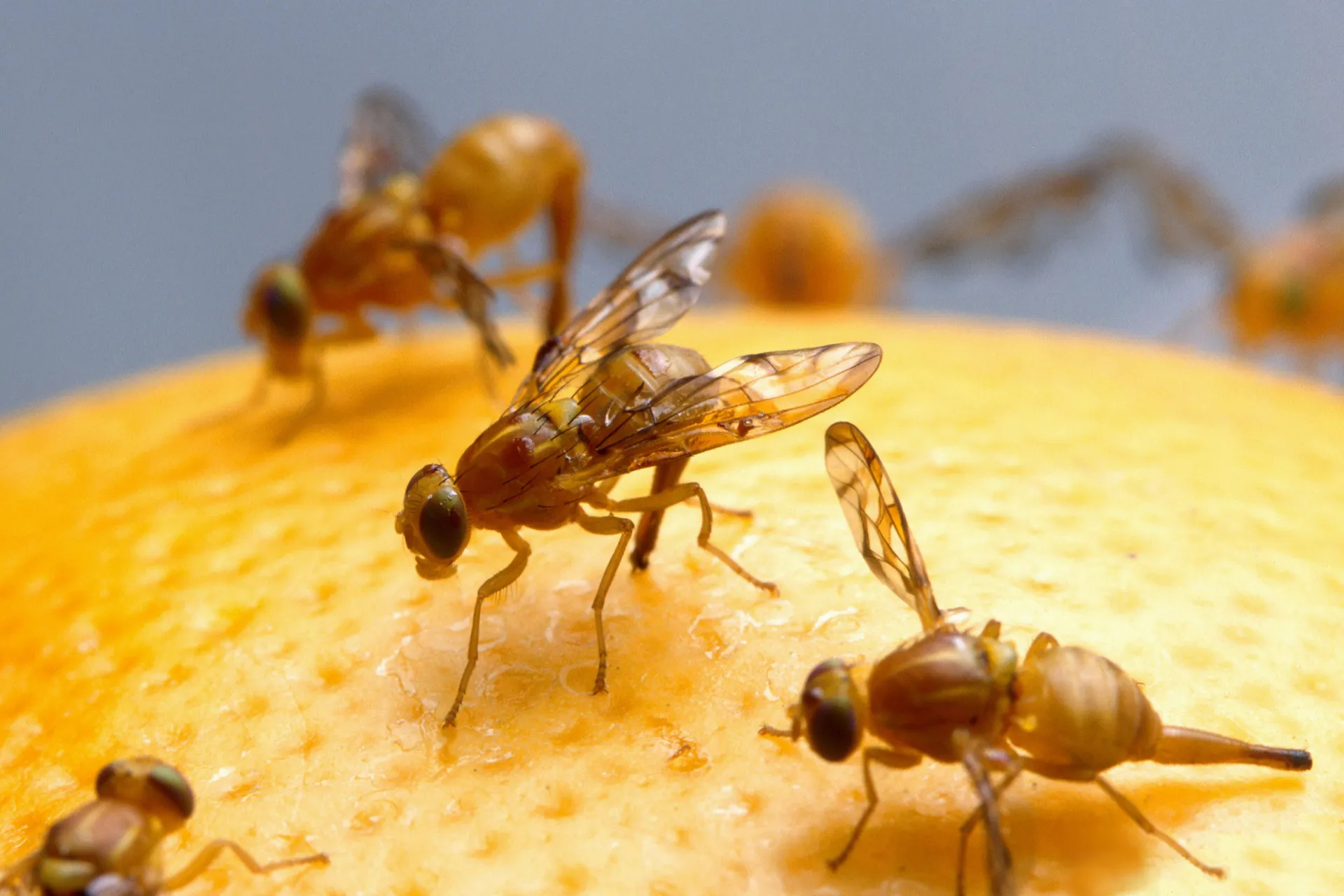
One female Mexican fruit fly can deposit large numbers of eggs: up to 40 at a time, 100 or more a day, and about 2,000 over her life span. Photo by Jack Dykinga, USDA Agricultural Research Service
Pest prevention in California isn’t quite the same as it is elsewhere. The state’s vast agricultural diversity—more than 400 crops across dramatically varied climates—creates a bounty that is as appealing to invasive insects and pathogens as it is to consumers.
In 2023–2024, California declared seven separate quarantines for invasive fruit flies, the most ever recorded in a single year. Eradication costs exceeded $208 million, stretching the state’s Pest Prevention System (PPS) to its limits and underscoring the need for a full evaluation of its capabilities.
To address these challenges, the Comprehensive Pest Prevention Program Analysis (C3PA) is now complete. The project provides quantitative evidence of the value of California’s pest-prevention efforts and highlights the urgent need to modernize tools, staffing, and infrastructure to keep pace with rising threats.
A partnership between the California Department of Food and Agriculture (CDFA) and the California Agricultural Commissioners and Sealers Association (CACASA), the research team includes experts from UC, CSU, CDFA, and other state partners. UC ANR-affiliated contributors include Rachael Callahan, Karen Jetter, Neil McRoberts, and Justin Valliere.
“The best investment we can make in our invasive pest system is to prevent infestations from happening in the first place.”
— Karen Ross, CDFA Secretary
“The return on investment for pest prevention is already high… the case for increased funding becomes overwhelming.”
— CACASA Executive Director
Effective but constrained
The C3PA analysis concludes that pest prevention is highly cost-effective, yet consistently underfunded relative to the value of California’s agricultural commodities at risk. Strengthening preventive planning, infrastructure, and personnel would significantly improve the PPS and better prepare the state for increasing pest introductions.
The report highlights the importance of perennial exclusion programs such as Detector Dog teams and the state’s 16 Border Protection Stations, which intercept pests before they enter California. It also examines pressures from urban agriculture, agritourism, and evolving sustainable pest-management policies.
A system under increasing threat
Over the past 20–30 years, pest incursions have increased in both number and complexity. California’s agricultural value continues to rise, but the systems protecting it have not kept pace. The strain experienced during the 2023–24 fruit fly eradication effort illustrates the risks of delayed investment.
Key threats include:
• Increasing pest introductions and diversity
• Budget cuts and staffing shortages
• Aging infrastructure and outdated technology
Case Study: The Rise of E-Commerce
E-commerce has emerged as a major pathway for invasive pests. Of 62 websites surveyed, only 16 clearly displayed shipping restrictions for plant materials entering California. While major platforms like eBay, Amazon, and Etsy have improved compliance, many smaller sellers fail to communicate restrictions—putting agriculture at risk.
Looking ahead
The C3PA findings align with the California Agricultural Research & Innovation Roadmap, which identifies Integrated Pest and Disease Management as a priority for future research and innovation.
The report outlines immediate funding needs to improve infrastructure, staffing, and exclusion activities. These represent critical shortfalls, not the long-term sustained investment required to maintain an effective, modern pest-prevention system.