
How LASCO’s Lightning Weeder™ Is Helping Farmers Regain Control of Resistant Weeds
By LASCO
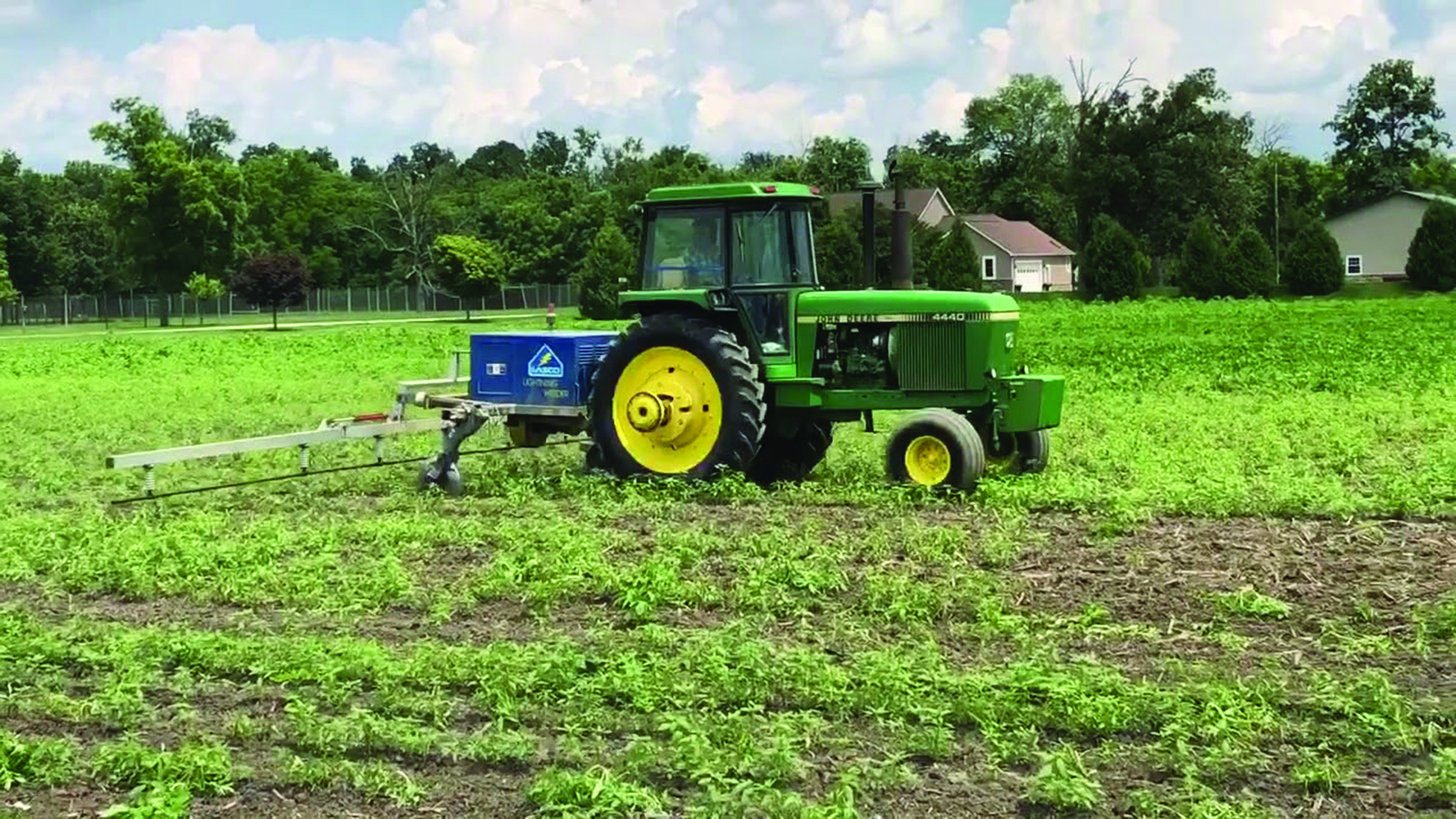
A proven, field-tested electric weed control system addressing one of agriculture’s most persistent challenges
Farmers have relied on chemical-based herbicides for generations to keep fields clean and productive. While effective, this raises some concerns about long-term land health and how this impacts soil biology as well as crop viability. In modern farming, farmers have been placing a greater emphasis on soil vitality and sustainable production practices that work with the land rather than against it.
Rather than applying chemicals that can disrupt ecosystems, LASCO’s Lightning Weeder has a patented Electric Discharge System (EDS) that can control weeds electrically, replacing the necessity of spraying chemicals on the field. The result is effective weed control that preserves soil structure, protects beneficial organisms, and supports long-term productivity.
“This technology doesn’t hurt the soil” mentions Kevin Olson when asked about the Lightning Weeder’s performance and impact in the field. “We’ve tested a lot and never found any negative results. There’s no damage to crops and no safety issues for drivers.”
At the core of the Lightning Weeder is a straightforward, but powerful scientific principle: electricity. When weeds contact the bar, they conduct the electrical current, which rapidly evaporates moisture within the plant and stops the growth. The soil remains undisturbed because the electrical current travels through the plant itself. There is no chemical residue and no disruption to microbial activity beneath the soil.
There are several factors which affect weed control with the EDS LIGHTNING WEEDER. The amount of contact between the applicator bar and the weeds will affect the level of weed control. Also, the level of control depends upon the specie and its conductivity. The machine is most efficient when contact is made between the applicator bar and the main stem and as many branches as possible. A single-stemmed weed, therefore, is usually easier to control than a many-branched weed. Younger weeds are generally easier to kill than more mature weeds. Scattered weeds are easier to kill than dense weed populations; so, it is advisable to treat each field more than one time during each season (three times is typical) as weeds are easier to treat when they are young and scattered than when they are mature and densely populated. A general guideline to determine when an operation is needed is when the weeds are 4" to 6" taller than the crop plants.
THE EDS LIGHTNING WEEDER applicator is hydraulically controlled for height adjustment and its electrical output is controlled from an operator control panel. For optimum results, the applicator bar height should be adjusted to pass just over the top of the crop plants. If the bar is too low, the crop plants themselves will become conductors and either growth will be stunted or the plant will be destroyed. On a sugar beet plant, for example, individual leaves will be destroyed on contact and if enough leaves are destroyed, yield reduction will occur. Excessive crop clearance, however, will result in missing many weed plants that are only slightly higher than the crop plants; so the operator must operate the EDS LIGHTNING WEEDER at optimum clearance.
With great power comes great responsibility, however. LASCO has recognized this and has engineered the Lightning Weeder with a comprehensive safety framework. An interlock system automatically disables electrical output if operating conditions are not met. Shielded components further reduce the risk of accidental contact, reinforcing LASCO’s commitment to safe, responsible operation.
As agriculture evolves toward practices that prioritize soil health and long-term management, tools like the Lightning Weeder are becoming integral to modern weed-control strategies. Farmers using the Lightning Weeder report greater confidence in managing fields without relying on chemical inputs.
1 AgWeb. (2024) “Could Electricity Be A New Weed Killer?” Source: https://www.agweb.com/news/crops/crop-production/could-electricity-be-new-weed-killer
About LASCO:
LASCO develops a chemical-free weed control system that gives farmers reliable tools to reduce complexity, restore soil vitality, and diminish chemical dependence. The LASCO Lightning Weeder uses an electric discharge system (EDS) to facilitate weed control while also ensuring zero damage to crops.
For more information about LASCO Lightning Weeder, visit: www.lightningweeder.com